Saturday, 25 June 2011

Ross Kemp On Gangs

Ross Kemp On Gangs Analysis 


Ross Kemp On Gangs is a documentary based programme which is presented by Ross Kemp, it follows Ross interviewing and following the most dangerous gangs around the world. He engages readers by putting himself in situations with tension and a climatic feel. I watched an episode of 'Ross Kemp On Gangs' and found the following information on the video 'Gangs In Liverpool'.


Conventions
  • Heavily interview based 
  • Subtitled 
  • Voice-overs used when appropriate 
  • Archive footage when going back in time
Soundtrack
  • Dramatic background music when building tension 
  • Change of scene, music changes to more upbeat, showing switch in mood
  • Music relevant to culture of location 
  • Relaxed music when interview is more formal, less unpredictability
Editing 
  • Fast paced editing when tensions rise
  • When using archive footage slow paced editing
  • When describing locations slow paced editing 

The use of archive footage helps provide the documentary with a different insight to the viewer.


Friday, 24 June 2011

Rise Of Documentary


When it was formed?
In the early 1900s the first documentaies were introduced, and developed from that date.

What were the first documentaries?


Roamanticism=  Flaherty filmed a number of heavily staged romantic films during this time period, often showing how his subjects would have lived 100 years earlier and not how they lived right then. over the years.


The City Symphony= The continental, or realist, tradition focused on humans within human-made environments, and included the so-called "city symphony" films.


How has it changed?
Documentaries have changed significantly since the first ones, the new technologies have helped documentaries. Technology such as handheld cameras have helped documentaries progress because of the ease of filming. Handheld camera make filming documentaries easier because the camera men can follow the situation as it unfolds making the audience feel more involved. The camera angles also present a realistic approach with the audience seeing the camera's real footage.


Key dates in documentary history:


1990: Early film (pre-1900) was dominated by the novelty of showing an event.


1915: Scenics were among the most popular sort of films at the time.


1920Robert J. Flaherty's Nanook of the North in 1922, documentary film embraced romanticism.


1925: The propagandist tradition consists of films made with the explicit purpose of persuading an audience of a point


1935:In Britain, a number of different film-makers came together under John Grierson. They became known as the Documentary Film Movement.


1950'sCinéma vérité (or the closely related direct cinema) was dependent on some technical advances in order to exist: light, quiet and reliable cameras, and portable sync sound.
New fundamentals were: following a person during a crisis with a moving, often handheld, camera to capture more personal reactions. There are no sit-down interviews, and the shooting ratio (the amount of film shot to the finished product) is very high, often reaching 80 to one. 


1960-70's: Documentary film was often conceived as a political weapon against neocolonialism and capitalism in general.


Modern timesThe nature of documentary films has expanded in the past 20 years from the cinema verité style introduced in the 1960s in which the use of portable camera and sound equipment allowed an intimate relationship between film-maker and subject. Modern documentaries have some overlap with television forms, with the development of "reality television" that occasionally verges on the documentary but more often veers to the fictional or staged. The making-of documentary shows how a movie or a computer game was produced.

Documentary Awards

The Academy Award
for Documentary Feature 2010:   Inside Job
                              Gasland
                              Restrepo
                              Waste Land


Thursday, 23 June 2011

Participatory Documentary


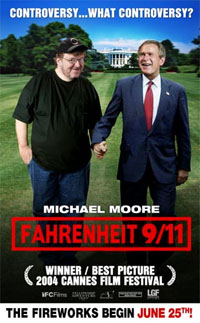
Fahrenheit 9/11

Fahrenheit 9/11 is a 2004 documentary film by American filmmaker and political commentator Michael Moore. The film takes a critical look at the presidency of George W. Bush, the War on Terror, and its coverage in the news media. The film holds the record for highest box office receipts by a general release political film. It is the highest grossing documentary of all time domestically.

In the film, Moore contends that American corporate media were "cheerleaders" for the 2003 invasion of Iraq and did not provide an accurate or objective analysis of the rationale for the war or the resulting casualties there. The film's attack on the Bush administration generated some controversy at the time of the film's release, including some disputes over its accuracy. Moore has responded by documenting his sources.

This is an example of expository because there is emphasis on the interaction between filmmaker and subject. Michael Moore gets involved and appears in parts of the footage.

Expository Documentary

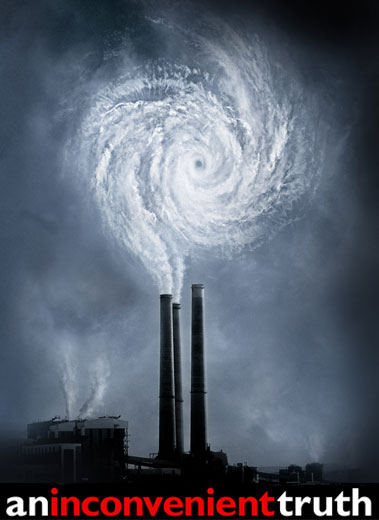
The Inconvenient Truth
An Inconvenient Truth is a 2006 documentary film directed by Davis Guggenheim about former United States Vice President Al Gore's campaign to educate citizens about global warming via a comprehensive slide show that, by his own estimate, he has given more than a thousand times.An Inconvenient Truth focuses on Al Gore and on his travels in support of his efforts to educate the public about the severity of the climate crisis.

An Inconvenient Truth is an example of an expository documentary because it relies on verbal commentary and argumentative logic to make its strong case for prevention of global warming.

Poetic Documentary

Olympia

It was the first documentary feature film on the Olympic Games ever made. Many advanced motion picture techniques, which later became industry standards but which were groundbreaking at the time, were employed, including unusual camera angles, smash cuts, extreme close-ups, setting the railway tracks on the stadium to shoot the crowd and the like. The techniques employed are almost universally admired, but the film is controversial due to its political context.

The film is a documentaary on the Olympic Games in 1938, which shows audience, the frst documentary made, of how the Olympic games ran and the politcal issues involved.  

Observational Documentary

Bob Dylan: Dont Look Back

Dont Look Back is a 1967 documentary film by D.A. Pennebaker that covers Bob Dylan's 1965 concert tour of the United Kingdom.

Portrait of the artist as a young man. In spring, 1965, Bob Dylan, 23, a pixyish troubador, spends three weeks in England. Pennebaker's camera follows him from airport to hall, from hotel room to public house, from conversation to concert. Joan Baez and Donovan, among others, are on hand. It's the period when Dylan is shifting from acoustic to electric

The film is very typical of observational documentary because the film observes the concert and provides the audience with a clear viewing. The film doesnt have much voice over because conversations and music being played provide a huge role in the film.

Reflexive Documentary

File:Man with a movie camera.jpgMan With A Movie Camera

Man With A Movie Camera is an experimental 1929 silent documentary film, with no story and no actors, by Russian director Dziga Vertov, edited by his wife Elizaveta Svilova.


This film is famous for the range of cinematic techniques Vertov invents, deploys or develops, such as double exposure, fast motion, slow motion, freeze frames, jump cuts, split screens, extreme close-ups and tracking shots.


Thursday, 16 June 2011

Types Of Documentaries


There are 6 types of documentaries:


Expository:

  • voiceover addresses audeince directly 
  • voiceover could be voice of God 
  • images used to illustarte voiceover 
  • editing used for continuity-support arguments 
  • footage, interviews, stills archive to support arguement 
  • attempt to pursuade audeince 

Observational:

  • location shooting hand held 
  • long takes are dominant 
  • synchronous sound recording-on screen 
  • no voiceovers 
  • no interviews 
  • documentary maker's presence is hidden 
  • subjects pretend they aren't being filmed 

Reflexive:
  • borrows techniques from fiction film for an emotional, subjective response 
  • empahsises expressive nature of film 
  • voiceover is questioning rather than authoritive 
  • reliance on suggestions and implied meaning rather than fact 

Performative:
  • borrows techniques from fiction film for an emotional subject response 
  • the expressive nature of film is emphasised, anti realist techniques. 
  • often sound and lighting is used to create a dramatic effect. 
  • voice overs if present is likely to be uncertain to the audience rather than authoritative 
  • relies heavily on suggestion and implied meaning rather than real life true fact. 

Participatory:

  • Documentary-maker (and crew) interacts with subject
  • Interviews dominate but tend to be informal-literally 'on the run' questioning.
  • Use of archive material-stills, news footage, newspaper headlines, letters ect.
  • Long takes dominate.
  • Synchronous (direct) sound recording.
  • Voiceover, usually by the documentary-maker.
  • Documentary-maker is visible to the audience-intervenes and participates in the action.
Poetic:

  • Documentary-maker gives subjective view.
  • Not in typical narrative sructure.
  • Particular mood/tone is created-enchanced by music.
  • Some light rhetoric but not always.
  • Events are under-developed and situations can be left unsolved.
  • Unrelated shots edited togheter-linked by a mood/music.
  • Perceived as Avant-garde (innovative, experimental, pushes boundaries)

Wednesday, 15 June 2011

Nick Broomfield

I produced a powerpoint on the well-known documentary maker, Nick Broomfield. I learnt that Nick has his own crew, in which he uses his voiceovers when making the documentary and also appears in the documentary too. Nick changed his style from oberservational style to have more freedom in making documentaries.


Louis Theroux Documentary Clip

Louis Theroux: Mega Miami Jail

Louis Theroux on Miami Mega Jails. Louis produced documentary on the jail and in this clip it shows him interviewing a prisoner who told Louis of the prsion moto of 'Game Ain't Based On Sympathy'.


This documentary, has many typical aspects of a documentary. Many of the shots were filmed with hand held cameras, following Louis and his jouney through the jail studying and interviewing the convicts. Typical camera shots would be close ups showing the topic of section and more typical camera shots would be long shots showing the locations of the jail to the audience. Typical editing shots are shot reverse shot which shows the reactions of Louis and the people interviewed to show audeince the reactions and speech and the two different people. Typical sounds used are asynchronous, which is the narrative voiceover over the scenes played throughout.        

Thursday, 9 June 2011

Reseach Into Documentarys

Louis Theroux is an Enlgish broadcaster who had produced many well known documentarys such as Louis Theroux's Weird Weekends. Louis has set up his own website http://louistheroux.com/ which contains a blog of his latest documentaries etc. He currently works for the BBC producing documentaries and popular TV series. Louis's current awards and nominations are:

  • Won: Richard Dimbleby Award for the Best Presenter (Factual, Features and News) for Weird Weekends
  • Won: Richard Dimbleby Award for the Best Presenter (Factual, Features and News) for When Louis Met...
  • Nominated: Best Presenter For: When Louis Met...

Some of Louis's documentaries include:

  • Swingers
  • Black Nationalism 
  • Demolition Derby 
  • Thai Brides
  • Gangsta Rap

A screenshot of Louis's blog on his official website.